Discovery
Search, categories, tags, ranking and collections create multiple ways into the marketplace without turning it into an uncurated file dump.
Solo product · Live early access
A marketplace and community designed to make system configurations discoverable, trustworthy, and easy to share.
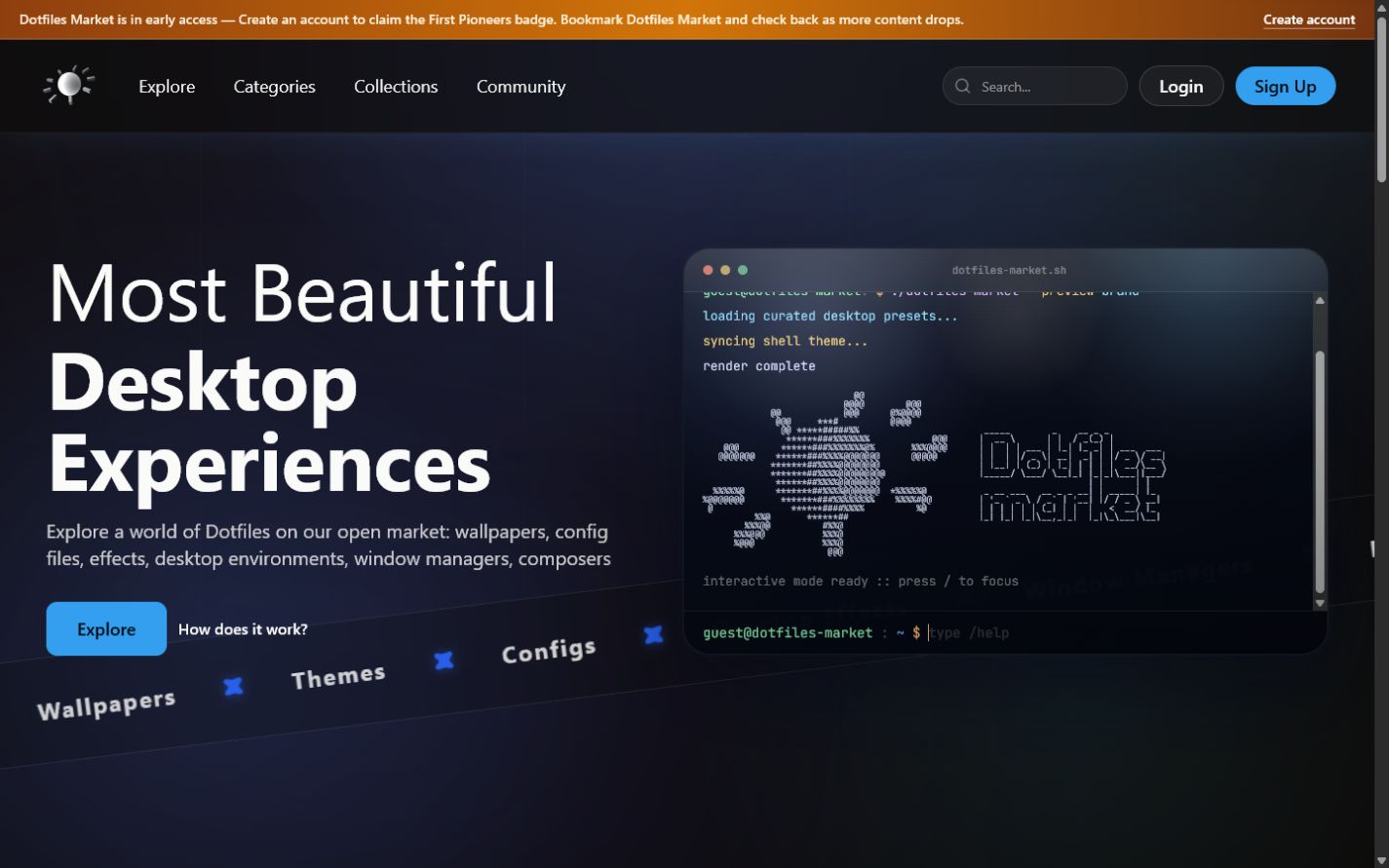
The live homepage frames dotfiles as complete desktop experiences, with an interactive terminal, featured showcases, categories, and creator signals.
The premise
Personal configurations carry years of decisions, but finding and evaluating them is fragmented. Dotfiles Market gives that knowledge a dedicated place for both creators and people building their next environment.
I designed and built the product as one connected system—from the first discovery path to storage, moderation, analytics, testing, and deployment.
The live product
Real public screens from the running early-access product. Each surface answers a different question in the user journey.
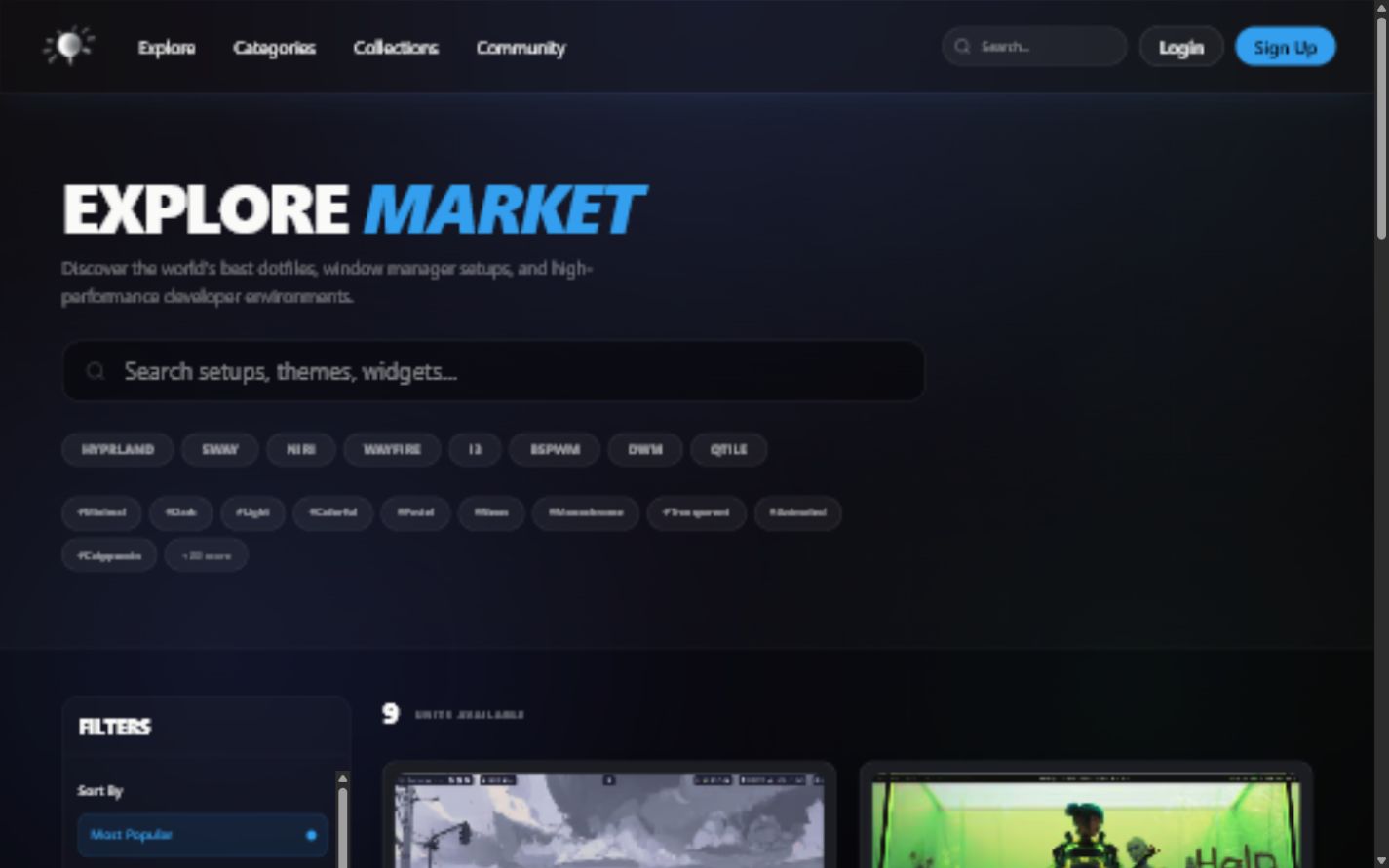
A purpose-built market view combines free-text search, compositor categories, visual tags, sorting, price controls, and result cards. Discovery can begin with a tool, an aesthetic, or a creator.
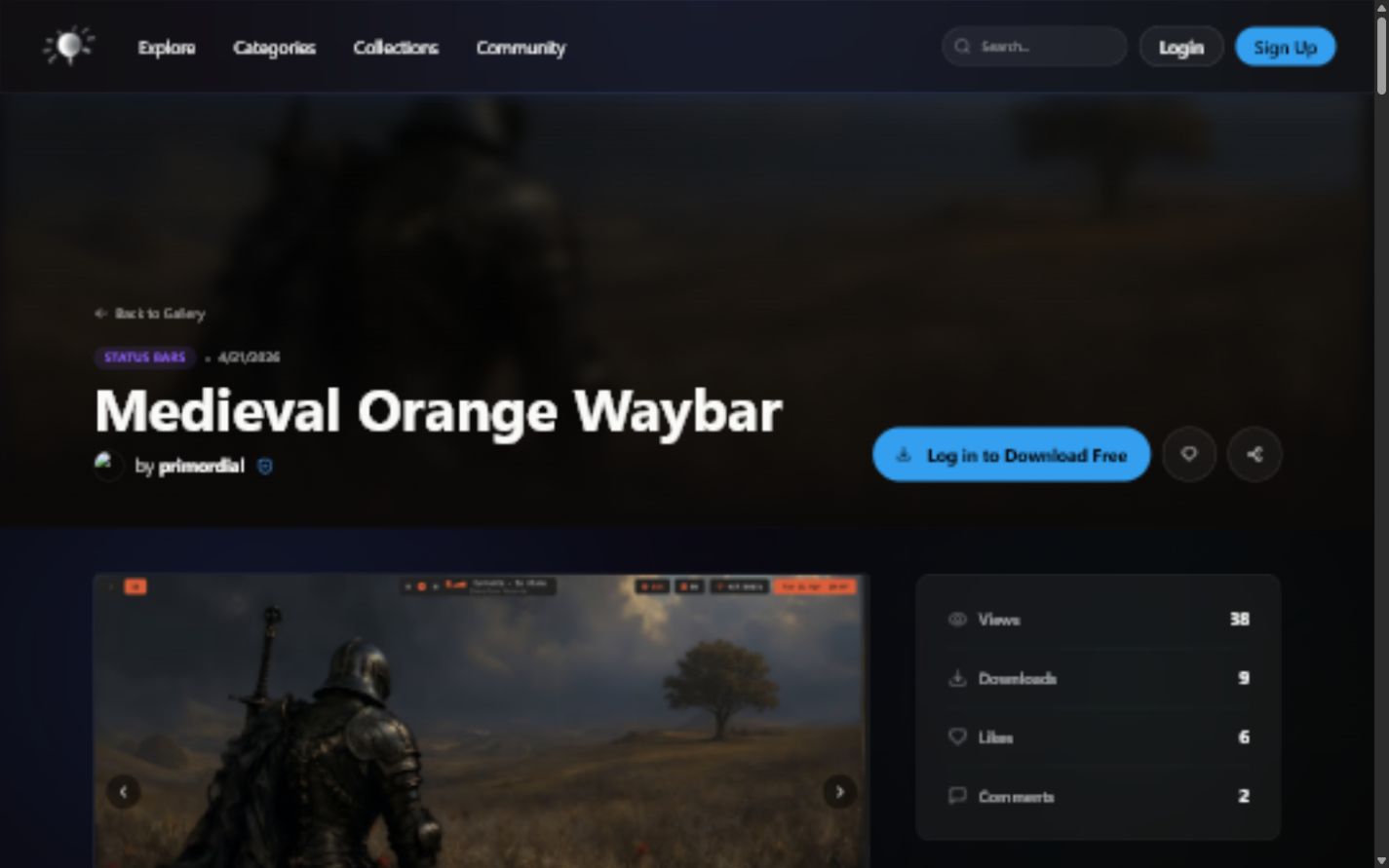
Every showcase carries real imagery, creator attribution, engagement signals, installation documentation, requirements, tags, and controlled download access. The page treats configuration as a maintained product.
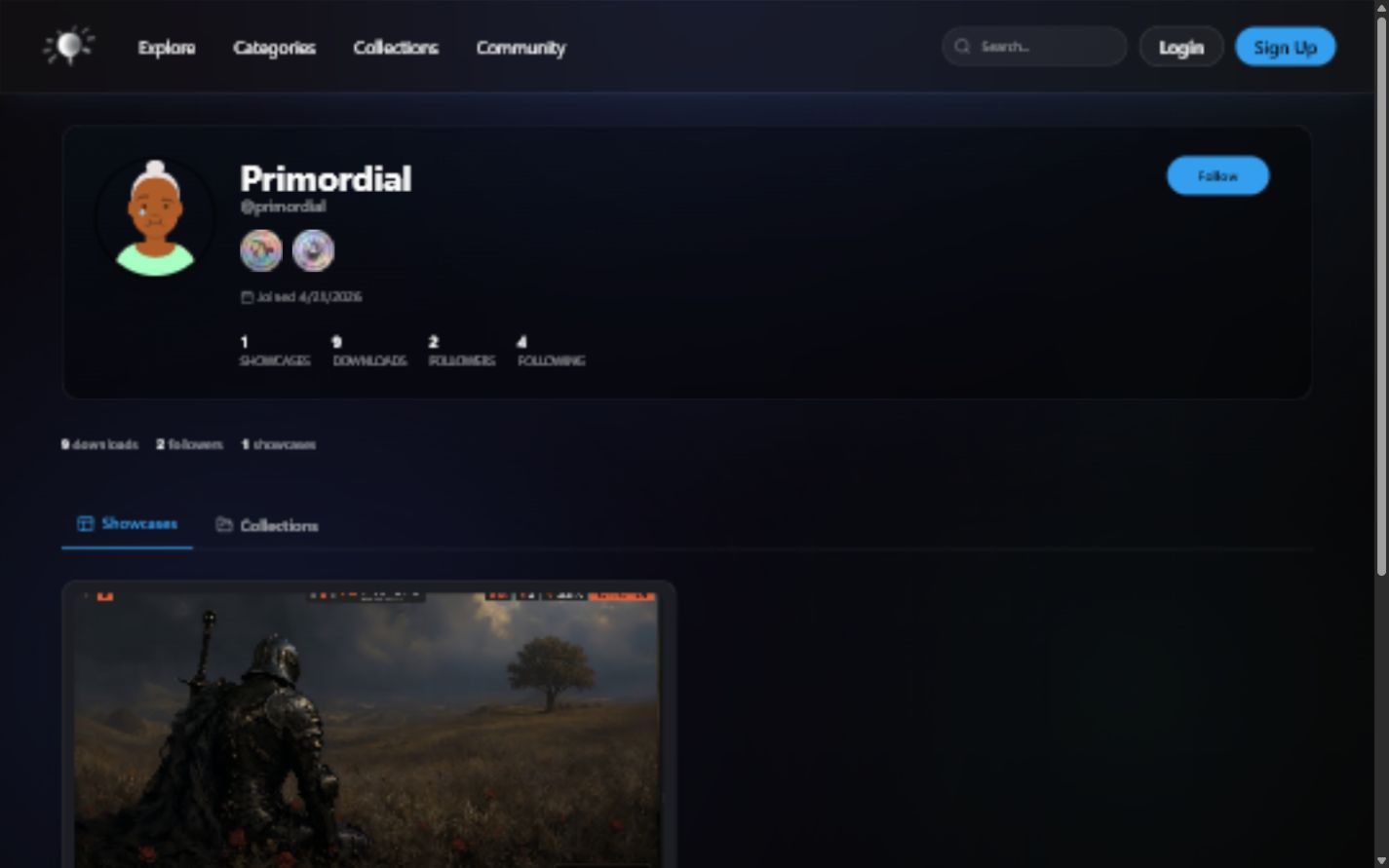
Profiles connect showcases, badges, downloads, followers, collections, and reputation. This turns an isolated upload into part of a visible body of work.
The product loop
$ market search --tag waybar
> 9 units indexed
> creator identity verified
> screenshots hydrated
> install guide parsed

$ showcase inspect medieval-orange
category     status-bars
platform     linux / wayland
access       controlled
docs         complete
community    active

$ bash install.sh
✓ backup created
✓ config installed
✓ environment ready
The system
Search, categories, tags, ranking and collections create multiple ways into the marketplace without turning it into an uncurated file dump.
Creator profiles, follows, comments, badges and public metrics make authorship visible and give maintainers a durable audience.
Structured uploads, screenshots, documentation, object storage and access-controlled downloads turn configuration files into releases.
Moderation, audit trails, analytics, SEO, storage cleanup, testing and observability keep the public product supportable.
Architecture
Next.js, React, and TypeScript deliver the interface. A NestJS service owns the application domain, with PostgreSQL and Drizzle for durable data, Better Auth for identity, and MinIO for object storage.
Docker and Traefik shape deployment. Umami measures the product, while Prometheus and Grafana make the running system observable.
Launch discipline
Stripe commerce has been implemented behind a disabled launch gate. It is not presented as a live payment feature in early access. Implemented capability and publicly available functionality stay deliberately separate.
One product, from visual language to production patch.